
canadian trespassing laws combine provincial rules for most private-property disputes with federal criminal law for specific conduct. Provincial statutes, including Ontario’s Trespass to Property Act and British Columbia’s Trespass Act, let owners deny entry or require people to leave; section 177 of the Criminal Code of Canada addresses trespassing at night near a dwelling-house.
Penalties and enforcement vary by location. A person’s legal position may depend on the province, the type of property, the notice given, whether they were told to leave, and whether they claim a right to enter or remain. A possible defence in some charges is “colour of right”: an honest belief that you had a legal entitlement to be there. That defence is not automatic and does not apply in the same way to every provincial trespass offence.
What are canadian trespassing laws?
Canadian trespassing laws come from both provincial statutes and federal criminal law. Most daytime disputes involving private property—such as entering a yard, farm, business, or posted parcel without permission—are dealt with under the province’s trespass legislation. Federal law applies in narrower situations, including trespassing at night near a dwelling-house under section 177 of the Criminal Code of Canada.
The distinction matters because the applicable statute can change the offence, available penalties, arrest powers, release procedures, and possible defences. Ontario, for example, uses the Trespass to Property Act, while British Columbia uses the Trespass Act. These provincial laws generally allow an occupier to deny entry or require someone who has entered to leave. Ignoring that direction can turn an initial entry into an ongoing trespass offence.
The relevant statute may also depend on the property itself. A private residence, commercial site, farm, animal facility, reserve, public building, and public park can be governed by different rules or overlapping laws. A person who enters a property for a lawful reason may also have a different legal position from someone who enters to damage property, intimidate an occupant, obtain access under false pretences, or interfere with an operation.
How do canadian trespassing laws work at the federal and provincial levels?
- Provincial trespass law: Usually governs access to private land and buildings during the day. It commonly addresses notice, signs, fencing, demands to leave, tickets, fines, and enforcement by police or other peace officers.
- Federal criminal law: Applies to offences created by Parliament. Section 177 of the Criminal Code makes it a summary conviction offence to loiter or prowl at night near a dwelling-house on someone else’s property.
- Federal property-specific legislation: Section 30 of the Indian Act addresses trespass on a reserve and operates separately from ordinary provincial private-property rules.
Section 177 is not a general rule that every nighttime entry is automatically criminal. The conduct must fit the provision’s wording, including the location, time, and loitering or prowling behaviour. Other federal rules may also apply in specific settings, while provincial legislation remains central to ordinary private-property disputes.
For that reason, the same conduct can have different consequences depending on where it occurred, whether the person had notice, whether they were told to leave, and whether they honestly believed they had a legal right to be there. A person crossing a property line by mistake is not automatically in the same position as someone who returns after being barred or refuses a clear direction to leave.
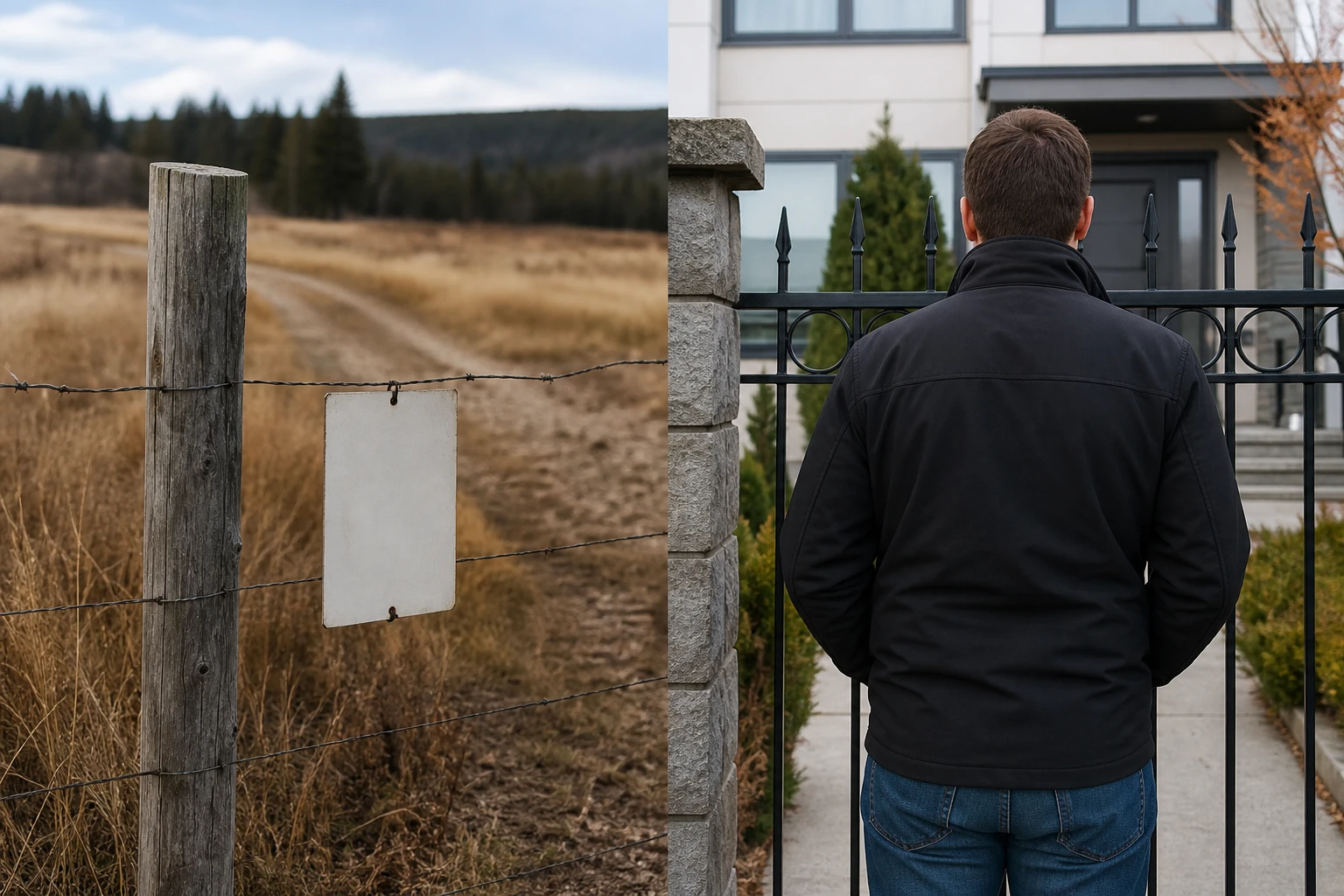
1. How do canadian trespassing laws operate at two levels?
Canadian trespassing law is not one uniform national code: federal legislation governs specific criminal offences, while provincial statutes usually deal with access to private property, notice, removal, and provincial penalties.
Federal criminal law and trespassing
The Criminal Code of Canada applies across the country, but it does not turn every daytime entry onto private land into a federal crime. Section 177 creates the specific offence of “trespassing at night”: loitering or prowling at night near a dwelling-house on property belonging to another person. It is prosecuted as a summary conviction offence.
The statutory language matters. Section 177 is concerned with loitering or prowling near a dwelling-house at night, not simply with the fact that a person is outdoors after dark. The Crown must prove the required elements of the offence. The surrounding facts, the location of the person, the nature of the conduct, and any lawful excuse may all be relevant.
The Indian Act is another distinct federal source. Section 30 addresses trespass on a reserve, rather than ordinary access disputes governed by a provincial trespass statute. It provides a maximum penalty of $50 or one month’s imprisonment for a summary-conviction offence. The federal Indian Act provisions therefore operate separately from the rules found in Ontario, British Columbia, and other provinces.
Federal jurisdiction does not mean that provincial law disappears from reserve-related situations. The correct analysis may depend on the conduct, the land involved, the applicable federal provision, and any other legal rights or restrictions affecting access. Reserve land also raises distinct questions about Indigenous rights, governance, and authority, so a general provincial trespass explanation may not answer the dispute.
Provincial trespass statutes and private property
Most ordinary daytime disputes—such as entering a posted business, walking onto a farm after being warned, or refusing to leave a private lot—are handled under provincial law. Ontario’s Trespass to Property Act and British Columbia’s Trespass Act contain the main provincial rules for those jurisdictions.
Ontario’s statute addresses entry onto premises when entry is prohibited, engaging in a prohibited activity, and failing to leave when directed by an occupier or someone acting with the occupier’s authority. Signs, fences, gates, and direct notice can be important because they help establish how the restriction was communicated.
British Columbia’s statute similarly addresses entering premises when entry is prohibited, failing to leave after being directed to do so, and related notice requirements. Its definitions and enforcement provisions must be read in the context of the particular allegation. A person should not assume that the Ontario wording, procedure, or arrest rule applies in British Columbia.
Alberta has its own trespass legislation and enforcement framework. The current Alberta rules should be checked in the Alberta legislation database before relying on a penalty, compensation provision, or enforcement power. A news report can summarize a legislative change, but the enacted statute is the better source for the operative wording, commencement date, and applicability.
These statutes also set out enforcement powers and provincial offences. The exact rule still depends on the province, the property, the notice given, and the conduct involved. That is why identifying the applicable statute is the first step in any Canadian trespass dispute.
Jurisdiction-by-jurisdiction comparison
The following table is a practical starting point, not a substitute for reading the statute or obtaining advice about a specific charge. It separates the federal provisions from the provincial rules and highlights why the same conduct cannot be assessed under one national trespass formula.
| Jurisdiction or provision | What it generally addresses | Important limitation | Primary source |
|---|---|---|---|
| Ontario | Entry onto premises when prohibited, prohibited activities, remaining after notice, and directions to leave. | The notice, occupier, premises, offence, and enforcement wording in the Ontario statute control. Ontario’s arrest provision is not a general arrest power for every property disagreement. | Ontario Trespass to Property Act |
| British Columbia | Entry onto premises when prohibited, failure to leave after direction, notice, and provincial enforcement. | British Columbia’s definitions, notice rules, arrest conditions, and release procedures must be applied as written. They should not be inferred from Ontario law. | British Columbia Trespass Act |
| Alberta | Provincial trespass offences, enforcement, and remedies under Alberta legislation, including rules that may apply differently to individuals and corporations. | Penalty figures and commencement dates must be confirmed against the enacted Alberta provision in force on the date of the conduct. | Alberta legislation database |
| Criminal Code, section 177 | Loitering or prowling at night near a dwelling-house on another person’s property without lawful excuse. | It is a specific federal summary-conviction offence, not a rule that every nighttime entry is criminal. | Justice Laws: Criminal Code |
| Indian Act, section 30 | Trespass on a reserve as a distinct federal offence. | It is not the general penalty for every trespass dispute in Canada and must be considered with the nature of the reserve land and conduct. | Justice Laws: Indian Act |
The table also explains why a person should identify the location before asking whether police can arrest, whether a fine applies, or whether a colour of right argument is available. A legal answer based on Ontario’s wording may be wrong for British Columbia or Alberta, while a provincial answer may miss a federal offence involving a dwelling-house, reserve, or another federally regulated setting.
2. What counts as trespassing on private property?
Trespassing on private property generally means entering when access is prohibited, staying after permission has been withdrawn, or returning after the owner or occupier has denied access. The exact legal test depends on the province, but daytime land trespass is usually dealt with under provincial legislation rather than one universal Canadian rule.
Notice, signage, fencing, and being told to leave
Notice can be direct or communicated through the condition of the property. A locked gate, fence, “No Trespassing” sign, or posted restriction may show that entry is not permitted. In other situations, an owner, tenant, security guard, or another person authorized to control the property may tell someone not to enter or instruct them to leave.
The strength of the notice depends on the circumstances. A sign may be difficult to see, a fence may be incomplete, or a boundary may be unclear. Conversely, a direct message, letter, verbal direction, or prior warning may make the restriction unmistakable. Keep the actual wording and timing because a later disagreement may turn on precisely what the person knew and when they knew it.
For example, walking through a fenced yard after seeing a warning sign, entering a private construction site, or remaining in a business’s restricted area after staff withdraw permission may create a trespass issue. Returning the next day after being specifically barred from the property can also matter, even if no new sign has been installed.
Unintentional entry is not automatically harmless. A person who crosses a property line by mistake may have an explanation, particularly if the boundary was unclear, but the circumstances and the applicable provincial statute still matter. This is sometimes described as accidental trespassing.
Permission can also be limited. A customer may be permitted to enter a store during business hours but not a staff-only room. A contractor may have access to a work area but not a private residence. A visitor may be allowed to attend one address but not to enter a neighbouring parcel. The question is not simply whether the person was once on the property with permission; it is whether the permission covered the entry, location, activity, and time in question.
What should a property owner do when someone will not leave?
A property owner should give a clear direction to leave, avoid physical confrontation, and document what happened. Useful records can include the date and time, the person’s conduct, photographs of signs or barriers, messages withdrawing permission, and the names of witnesses.
- State plainly that the person no longer has permission to remain.
- Identify the restricted area and, where safe, give a reasonable opportunity to leave.
- Keep doors, gates, and other access points secured, and preserve relevant video footage.
- Contact police or the appropriate enforcement authority if the person refuses to leave, returns after being barred, threatens anyone, or causes damage.
- Do not exaggerate the allegation when making a report. Describe what happened, what notice was given, and what evidence exists.
Do not assume that a warning sign alone resolves every dispute. If access, tenancy, easement, Indigenous land rights, or a claimed legal entitlement is involved, obtain province-specific legal advice before taking further steps.
Owners should also distinguish trespass from a disagreement about possession. Someone who has never had permission to enter may present a straightforward access problem. Someone who was a tenant, licensee, employee, family member, contractor, or invited guest may raise additional questions about how permission ended and what process applies next.

3. Can police arrest someone for trespassing without a warrant?
Yes, a warrantless arrest may be available in some provincial trespass situations, but the power depends on the exact statute and its conditions. It does not follow that every property dispute permits an arrest. The relevant question is whether the officer has the grounds required by the applicable legislation and whether the observed facts fit the offence.
Ontario’s arrest provision
Ontario’s Trespass to Property Act contains a specific arrest rule. Section 10(1) provides that a police officer may arrest without a warrant a person whom the officer believes, on reasonable and probable grounds, to be on premises in contravention of section 2. The power is therefore tied to the statutory offence and the officer’s required belief; it is not an unrestricted power to arrest whenever an occupier complains.
The Ontario statute also contains procedures that can affect what happens after an arrest. Police may investigate, identify the person, determine whether the statutory grounds exist, and address release or court processes under the applicable law. The occupier’s request is evidence to consider, not a substitute for the officer’s legal assessment.
British Columbia’s arrest provision
British Columbia must be assessed under its own Trespass Act. Section 9 addresses warrantless arrest by a peace officer where the statutory grounds are met for a person the officer reasonably believes is committing an offence under the Act. The British Columbia provision should be read together with the Act’s definitions, offence wording, and provisions governing what happens after arrest.
That wording is materially important. A British Columbia officer still needs the statutory basis for the arrest and reasonable grounds connected to an offence under the provincial Act. A landowner cannot create an arrest power merely by describing a person as a trespasser. The officer must assess the evidence, the notice, the person’s conduct, and whether the statutory test is satisfied.
Why the provinces should not be grouped together
It is inaccurate to say that Ontario, British Columbia, and every other province have identical warrantless-arrest rules. The statutes may differ in the wording of the offence, the definition of a peace officer, the grounds required, whether the person must be observed committing the offence, and what release or appearance process follows.
For example, an officer might consider evidence that a person entered a posted property, remained after being directly told to leave, or returned after receiving clear notice that entry was prohibited. Those facts do not automatically establish an offence. The officer must still connect the circumstances to the relevant provincial legislation and form the required statutory grounds.
A trespass complaint therefore does not guarantee an arrest. Police may instead attend, investigate, identify the people involved, direct someone to leave, issue a ticket where the statute permits, or decide that the matter is primarily a civil dispute. Arrest is an enforcement option governed by the statute and the facts, not an automatic response to a landowner’s request.
If you are arrested, do not resist or physically prevent the officer from acting. Ask why you are being arrested, provide identifying information as required, and request legal advice before answering substantive questions. If you own the property, preserve photographs, signage, messages, video, and the date and wording of any direction to leave; those details can help an officer assess whether the statutory test is met.
4. Is trespassing at night treated differently under Canadian law?
Yes. Section 177 of the Criminal Code of Canada creates a specific federal offence for trespassing at night, but it does not make every nighttime entry onto private property a criminal offence.
What does the Criminal Code provision cover?
To fall within section 177, the conduct must involve loitering or prowling near a dwelling-house, at night, on property belonging to another person. “Loitering” generally suggests remaining in the area without an apparent lawful purpose, while “prowling” points to moving around or watching in a suspicious way. The location and circumstances matter: the provision is aimed at conduct near someone’s home, not simply an ordinary person walking across land after dark.
The offence proceeds by summary conviction. That means it is dealt with under the Criminal Code’s summary-conviction framework rather than treated as an indictable offence. The Crown would still need to prove the required elements, including the nighttime setting, the accused’s presence on another person’s property, and the loitering or prowling conduct near a dwelling-house.
Section 177 also refers to the absence of a lawful excuse. That does not mean that any explanation automatically defeats the charge. Whether an excuse is lawful, and whether it applies to the facts, can be a legal issue requiring careful assessment.
This federal rule should be kept separate from ordinary daytime trespass. Most disputes involving entry onto private land, refusing to leave, or ignoring signs are handled under provincial legislation, such as Ontario’s Trespass to Property Act or British Columbia’s Trespass Act. Those laws can apply whether the conduct occurs during the day or at night, depending on the province and the facts.
For example, a person who cuts across a posted property at night may face a provincial trespass issue. A person who repeatedly prowls near a residence after dark may also raise the distinct federal concern under section 177. The time of day is important, but it is only one part of the legal test.
5. What penalties can apply to trespassing in Canada?
Penalties for trespassing in Canada vary by the governing statute, province, property type, and what the person actually did. A daytime entry onto private land may lead to a provincial ticket or fine, while trespassing on a reserve or committing a related offence can trigger federal penalties.
Trespassing on a reserve under the Indian Act
Section 30 of the federal Indian Act creates a specific offence for trespassing on a reserve. A person convicted on summary conviction may face a maximum penalty of up to $50 or one month of imprisonment, as set out in the Indian Act. The provision applies specifically to reserve land, so it should not be treated as the general penalty for every trespass dispute in Canada.
The provision should also be distinguished from disputes about access, Indigenous rights, reserve administration, or permission granted by a First Nation or another authorized body. Calling conduct “trespassing” does not answer those underlying questions. The relevant land status, authority, and statutory wording must be established first.
Can you go to jail for trespassing in Canada?
Yes, imprisonment is legally possible in some trespassing cases, but the outcome depends on the statute and circumstances. The court may consider factors such as whether the person ignored notice to leave, caused property loss or damage, entered a specially protected site, or acted alongside another offence.
Alberta’s updated trespass legislation has been publicly reported as creating substantially higher potential consequences for certain conduct, including different maximum amounts for individuals and corporations and compensation for property loss or damage. Because the amount, offence category, applicability, and effective date depend on the enacted provision, confirm the current text in the Alberta legislation database before relying on a particular figure in a legal argument.
The figures previously attributed in this article to CTV News Edmonton cannot be verified from the generic CTV News Edmonton homepage link supplied with the draft. The homepage does not identify the specific article, legislative provision, or effective date. Accordingly, those dollar amounts should not be treated here as confirmed legal advice or as automatic sentences.
In every province, a maximum penalty is not the same as the penalty a person will receive. A charge, conviction, fine, compensation order, or jail term depends on the legislation used and the evidence before the court. The court may also consider the person’s conduct, prior record, damage, intent, notice, and whether a legal entitlement was claimed.
6. What is the colour of right defence?
Colour of right is a legal concept that may apply when an accused honestly, but mistakenly, believes they have a legal entitlement to be on the property. The statutory basis must be identified before relying on it. In a Criminal Code charge, section 429(2) provides a framework under which a person is not deemed to have used or attempted to use force without colour of right or, in some circumstances, reasonable grounds for believing they had colour of right. That Criminal Code framework does not automatically apply to every provincial trespass charge.
The issue is not simply whether the person can now give an explanation. The relevant question depends on the offence charged, the wording of the governing statute, and the evidence about the person’s state of mind and claimed entitlement when the conduct occurred. An honest belief may be relevant, but saying that a belief was honest does not automatically defeat a provincial trespass allegation.
Common examples of mistaken entitlement
A colour of right argument may arise where someone honestly believes they own, lease, occupy, or otherwise have permission to use the land. Examples might include a boundary dispute, an unclear easement or right-of-way, a former tenant collecting belongings, or a person relying on a previous owner’s permission that was never clearly withdrawn.
The defence is different from simply ignoring a clear direction to leave. If the owner, occupier, or an authorised person clearly tells someone to leave, remaining on the property may support a trespass charge—particularly where the person understands that any earlier permission has ended. Saying “I thought I could stay” after receiving an unambiguous direction is not automatically a colour of right defence.
A claimed right also needs to relate to the conduct. A person may believe they have permission to use a driveway but not to enter the house. A tenant may have a right to occupy a unit but not a neighbouring unit. A contractor may have authority to complete specified work but not to remain indefinitely after the engagement ends. The scope of the alleged entitlement matters.
What evidence may matter?
Courts may examine the person’s communications and conduct before, during, and after the incident. Useful evidence could include:
- a lease, licence, easement, purchase agreement, or other document suggesting a right to use the land;
- messages, emails, or witness statements showing permission or a genuine boundary disagreement;
- survey plans, photographs, land records, or signs showing why the location or access route was unclear; and
- what the accused said and did after being told to leave, including whether they left promptly or tried to resolve the dispute.
An honest mistake about a legal entitlement is not the same as deliberate entry after permission has been revoked. The precise provincial statute, the wording of the charge, and the surrounding evidence all matter. Before relying on colour of right, identify whether the allegation is under the Criminal Code, the Ontario statute, the British Columbia statute, Alberta legislation, or another law entirely.
7. What special rules apply under canadian trespassing laws?
Special trespass rules may apply when the property is a reserve, a federally regulated site, a farm, a construction area, a business, or another location subject to specific provincial or federal legislation. Because the applicable statute can change the offence, notice requirements, enforcement powers, and penalties, identify the province and property type before relying on a general rule.
Why property type and legal status matter
A private residence, commercial property, farm, public facility, reserve, and federally regulated site may not be governed by the same access rules. The person’s relationship with the property can also matter. A tenant, licensee, contractor, employee, customer, family member, or invited guest may have rights or obligations that differ from those of a stranger who enters without permission.
Recent or proposed legislative changes should be checked against the enacted statute in force on the date of the incident. News coverage and summaries can help identify an issue, but the official legislation remains the more reliable source for the wording, effective date, and application of a trespass offence.
Frequently asked questions about canadian trespassing laws
Is trespassing a criminal offence in Canada?
Most ordinary daytime trespass disputes are handled under provincial legislation rather than as a general federal criminal offence. Federal criminal law applies in specific situations, including section 177 of the Criminal Code for loitering or prowling at night near a dwelling-house.
Can a property owner physically remove a trespasser?
A property owner should avoid physical confrontation and should give a clear direction to leave where it is safe to do so. If the person refuses to leave, returns after being barred, threatens anyone, or causes damage, contact police or the appropriate enforcement authority.
Does a “No Trespassing” sign automatically prove an offence?
A sign may help show that entry was prohibited, but it does not answer every legal question. The sign’s location, visibility, wording, the applicable provincial statute, the person’s conduct, and any claimed right to enter may all matter.
Can someone be arrested for trespassing without a warrant?
Sometimes. Certain provincial statutes give police or peace officers warrantless-arrest powers when specific statutory conditions and grounds are met. A property owner’s request alone does not automatically create an arrest power or guarantee that an arrest will occur.
What should I do if I am charged with trespassing?
Do not resist arrest or discuss the substantive allegations before obtaining legal advice. Record the location, notice given, communications, property documents, witnesses, and what happened after you were told to leave. Because Canadian trespassing laws vary by province and property type, obtain advice based on the exact charge and statute.