
squatters rights Ontario laws do not give someone automatic ownership simply because they occupy an empty property. Adverse possession—the legal process sometimes called “squatters’ rights”—is highly restricted, particularly for land registered under Ontario’s Land Titles system, and requires specific historical and legal conditions.
Property owners should also distinguish a trespasser from a tenant, former tenant, or permitted occupant, because different rules may apply under Ontario’s Residential Tenancies Act. Removing someone improperly can create legal risk, so document the occupancy and seek legal advice before changing locks, shutting off services, or taking other steps.
What are squatters rights in Ontario?
“Squatters rights” is a popular phrase, not usually the name of a standalone legal right in Ontario. Whether someone can remain in a property depends on the facts: how they entered, whether the owner gave permission, whether a tenancy was created, and whether the person is claiming an ownership interest.
Does Ontario have squatters rights?
Ontario does not give a person an automatic right to occupy a property simply because they have lived there for a certain period. An individual who enters without permission may be treated as a trespasser. Someone who was invited to stay may be an unauthorized occupant after that permission ends. A person who pays rent or has an agreement with the owner may instead be a tenant, even if there is no formal written lease.
Ownership claims are a separate issue. In limited circumstances, a person may raise an adverse-possession argument based on long-term occupation and other legal requirements. That is not the same as acquiring “squatters rights” by moving into an empty house. The title history, possession records, land-registration rules, and nature of the occupation all matter.
Why the word “squatter” can create legal confusion
“Squatter” is a practical label, not a precise legal classification. Calling someone a squatter does not decide which process applies or allow an owner to skip it. The same person may be described differently depending on the evidence:
- Trespasser: entered or stayed without legal permission.
- Unauthorized occupant: occupies the property without being an approved tenant or owner.
- Tenant: has a residential tenancy, whether documented formally or established through the parties’ conduct.
- Claimant: alleges an ownership interest that must be assessed under property law.
That distinction is critical because the route for addressing a trespasser is not necessarily the same as the process for ending a residential tenancy.
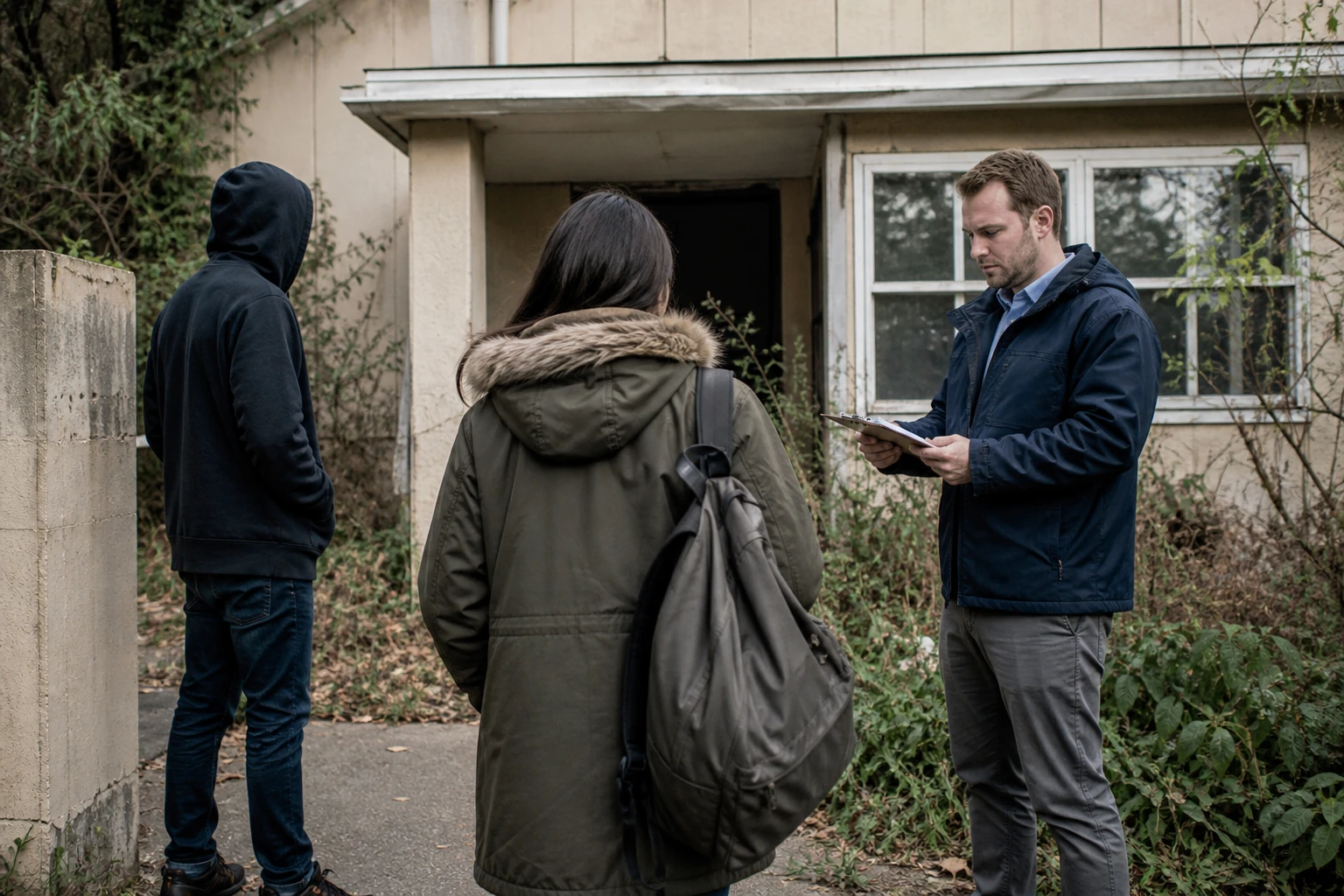
How Ontario law distinguishes squatters, trespassers, and tenants
Ontario generally treats an occupant according to the facts of the arrangement—not the label “squatter.” Consent, rent, an agreement to provide housing, and the type of accommodation can determine whether the person is a trespasser, an unauthorized occupant, or a tenant protected by the Residential Tenancies Act, 2006 (RTA).
Trespass versus a residential tenancy
A trespasser enters or remains on property without the owner’s permission or another legal right to be there. For example, someone who breaks into a vacant house, refuses to leave after permission is clearly withdrawn, or occupies a building without any agreement may be dealing with a trespass issue.
A residential tenancy is different. It can exist where the owner agreed—sometimes informally—to let someone live in a unit in exchange for rent. A written lease is useful evidence, but its absence does not automatically mean there is no tenancy. Messages, rent transfers, keys, the person’s belongings, and the parties’ conduct may all help establish what was agreed.
That distinction matters because the removal process changes. An owner generally cannot treat a tenant as a trespasser simply because the tenancy is disputed or rent is unpaid. If the RTA applies, the owner normally needs the appropriate notice and an order from the Landlord and Tenant Board before enforcing removal.
When might Ontario’s Residential Tenancies Act apply?
The RTA may apply when the occupant has a rental agreement for a residential unit, pays rent, or received consent to occupy the home as a tenant. It may also apply even when the parties never used the word “tenant.”
Some living arrangements are excluded or treated differently. For instance, a person who lives with the owner and shares a kitchen or bathroom may not have an RTA tenancy. A roommate, boarder, guest, family member, or caregiver may also have a different legal relationship depending on the facts. Before changing locks or serving a notice, identify the arrangement and get advice if the classification is uncertain.
Can squatters claim ownership of a property in Ontario?
Usually, a person cannot become the owner of an Ontario property simply by moving in or living there without permission. An ownership claim based on long-term possession is an adverse-possession claim, not a general “squatters’ right,” and it is technical, fact-specific, and difficult to establish.
An adverse-possession claim is also different from a claim to remain in possession. Someone may argue that they have a right to stay because of a tenancy, licence, agreement, or other legal relationship. That does not automatically give them an ownership interest. Ownership requires a separate legal analysis of the land, the registered title, the history of possession, and the applicable limitation rules.
What evidence matters in an adverse-possession claim?
The evidence must show more than uninterrupted occupancy. A court may examine whether the person exercised possession as an owner would, whether the possession was open and apparent, whether it was exclusive, and whether it occurred without the registered owner’s permission. Evidence that may matter includes:
- the dates and circumstances of entry;
- fences, gates, buildings, gardens, repairs, or other physical improvements;
- utility records, insurance documents, tax records, photographs, and correspondence;
- whether the registered owner knew about the use and objected to it; and
- surveys, historical title documents, and statements from neighbours or other witnesses.
Ontario’s land-registration system can significantly affect the analysis. A claim that might be arguable for land with an older registry history may not work the same way against registered title land. Limitation legislation and exceptions can also change the result, so there is no safe universal number of years or guaranteed outcome to apply to every property.
Before relying on an adverse-possession argument—or assuming one is impossible—have an Ontario property lawyer review the title and possession evidence. Informal occupation alone is not ownership.

What should a property owner do about an alleged squatter?
Start by identifying the person’s legal relationship to the property before changing the locks, serving a notice, calling police, or starting a court or Landlord and Tenant Board process. The right response depends on whether the person is a trespasser, an unauthorized occupant, a former tenant, or someone who may have a tenancy agreement.
1. Confirm how the person entered and why they are there
Ask how the person obtained access and whether anyone gave them permission to enter or stay. Check leases, text messages, emails, payment records, property-management notes, and statements from other occupants. For example, a person who entered through a broken window is treated differently from a friend, roommate, or former tenant who was invited in.
2. Document the situation without escalating it
Keep a dated record of what you observed, including damaged doors, unauthorized occupants, unpaid amounts, threats, and communications. Take photographs from areas you are legally entitled to enter, preserve relevant messages, and avoid threats, confrontation, utility shutoffs, or removing belongings yourself. Those actions can create additional legal problems.
3. Choose the correct Ontario removal process
If there is evidence of a break-in, active trespass, theft, threats, or property damage, contact police and explain the facts clearly. Police may respond to a criminal or immediate safety issue, but they may not decide a disputed civil or tenancy matter at the property. If the person claims a right to occupy the unit, legal advice may be needed before pursuing a court proceeding or another formal remedy.
4. Use the right notice when the person is actually a tenant
A landlord cannot simply label a tenant a “squatter” to avoid Ontario’s residential-tenancy rules. If the Residential Tenancies Act applies, the landlord generally needs the correct notice, evidence, and Landlord and Tenant Board process. The reason for ending the tenancy matters; for example, interference, damage, or overcrowding may call for an N5 form Ontario.
5. Get urgent help when there is a safety or property risk
Call 911 for an immediate danger. For serious damage, vulnerable occupants, suspected fraud, or uncertainty about the person’s status, speak with an Ontario property lawyer promptly. Do not rely on a generic eviction notice until the occupant’s legal relationship has been checked.
What should an occupant do if they are being called a squatter?
Do not assume the label is legally accurate; gather evidence showing why you are in the property and respond promptly if the owner serves a formal notice or court document.
Collect proof of your permission to be there
Save anything that explains how you entered the property and what arrangement you had with the owner or another occupant. Useful records may include:
- A lease, written agreement, email, text message, or social-media conversation giving you permission to stay.
- Rent receipts, e-transfers, bank records, or messages discussing rent, utilities, or shared household expenses.
- Mail, identification, insurance records, or other documents connecting you to the address.
- Evidence of a shared living arrangement, such as messages about a room, a family arrangement, or an agreement to provide care or services.
- Names and contact details for people who saw the agreement or know why you were allowed onto the property.
Keep the original files and make dated copies. Do not delete messages or rely only on a verbal explanation. If the arrangement was informal, write down what happened while the details are still fresh: who gave permission, when you moved in, what you agreed to contribute, and whether the owner set any conditions.
Respond carefully to notices and court papers
Read any written demand, notice, application, or court document closely. Note the date, the deadline, the property address, and the legal reason given for requiring you to leave. A demand to vacate is not necessarily the same thing as an order authorizing removal.
Respond in writing without making threats or admitting facts you dispute. Briefly state your position and attach only the documents needed to support it. If you receive an application or hearing notice, get advice from an Ontario tenant clinic or property lawyer quickly; missing a deadline can limit your ability to present evidence. If there is a lockout threat, utility shutoff, harassment, or immediate safety concern, seek urgent legal or emergency assistance rather than escalating the dispute yourself.
Common myths about squatters rights in Ontario
In Ontario, an alleged squatter does not automatically become a tenant or property owner; the legal result depends on how the person entered, the owner’s permission, any agreement between the parties, and the evidence available.
What is the difference between squatting and an unauthorized occupant?
- Myth: Staying for a short time creates ownership. Reality: A few days, weeks, or months of occupation does not transfer title. Ownership claims involve strict legal requirements and fact-specific evidence, not simply the length of someone’s stay.
- Myth: Receiving mail proves tenancy. Reality: Mail can help show that someone uses an address, but it does not, by itself, prove a lease, permission to occupy, or tenant status. The surrounding facts matter.
- Myth: Police always remove an occupant immediately. Reality: Police may respond to suspected trespassing, threats, break-ins, or other offences. But where the facts suggest a tenancy or a civil possession dispute, officers may not decide the issue on the spot.
- Myth: Every occupant is a tenant. Reality: A tenant, guest, family member, roommate, former tenant, licensee, and unauthorized occupant can have different legal positions. Calling someone a “squatter” does not resolve which category applies.
- Myth: A landlord can always lock someone out. Reality: Changing locks, removing belongings, or shutting off services can create serious legal problems if the person is protected by Ontario’s residential tenancy rules. Do not assume a lockout is safe because the occupant is behind on payments or has no written lease.
- Myth: Any tenant notice can remove an alleged squatter. Reality: A notice must match the legal relationship and the reason for ending occupation. Using an N12 form in Ontario, for example, is not a general solution for removing someone who may not be a tenant.
Because the same facts can point toward trespass, a tenancy, or another form of lawful occupancy, get fact-specific legal analysis before taking physical steps to remove anyone.
Frequently asked questions about squatters rights Ontario
Can someone become the owner of my Ontario property by living there?
Usually, no. Simply living in a property, paying for repairs, or receiving mail there does not transfer ownership. An adverse-possession claim depends on specific legal requirements and the property’s registration history; many Ontario properties are protected by the land-registration system, so an occupant cannot become the owner just by staying put.
Can I change the locks if someone is squatting in my property?
Do not change the locks until you have confirmed that the person is not a tenant or lawful occupant. If the Residential Tenancies Act, 2006 applies, a lockout can be an unlawful eviction even if you believe the occupant has breached the agreement. If the person entered without permission, document the entry and obtain advice on the correct possession or trespass remedy before taking self-help action.
Will the police remove squatters in Ontario?
Police may respond to an active break-in, threats, violence, or other criminal conduct. They may not remove a person where the facts look like a civil possession or tenancy dispute, particularly when the person claims they were invited or had permission to stay. Give officers clear evidence of ownership, unauthorized entry, and any immediate safety risk, but do not assume a police call replaces the proper court process.
What notice do I use to remove someone who is not a tenant?
There is no standard Residential Tenancies Act notice for a person who is genuinely a trespasser, so an N4, N5, or similar landlord notice may be the wrong tool. The appropriate step may involve a demand to leave, a police report for suspected trespass, or a court application for possession or an injunction, depending on how the person entered and the evidence available. If the person is actually a tenant or unauthorized occupant covered by the Act, the required notice and Landlord and Tenant Board process are different; for example, an N9 form in Ontario is a tenant-initiated notice, not a general squatter-removal form.
When should I speak with an Ontario property lawyer?
You should speak with an Ontario property lawyer as soon as the facts are disputed, the person claims a legal right to stay or own the property, or you are unsure whether the Landlord and Tenant Board (LTB) or an Ontario court has jurisdiction.
Legal advice is especially important when:
- Tenancy status is unclear: the occupant says they paid rent, had permission to live there, or made an agreement with a former owner, while you believe they are trespassing.
- Ownership is claimed: the occupant says they have an interest in the property, refers to adverse possession, or produces documents you do not recognize.
- Someone has been locked out: changing locks, removing belongings, or cutting off access can create serious legal issues if the person is a tenant or authorized occupant.
- There is damage or a safety concern: take photographs, preserve messages and repair records, and call emergency services if there is an immediate threat. Do not confront someone where doing so could escalate the situation.
- There are multiple occupants: different people may have entered under different arrangements, making one general removal step risky.
- You receive formal documents: do not ignore an LTB application, court claim, hearing notice, demand, or enforcement document. Deadlines can affect your options.
- You cannot identify the correct process: the right response may depend on how the person entered, whether rent or permission was involved, and whether the dispute belongs before the LTB or the court.
Before the consultation, gather the deed or title information, lease or messages, payment records, photographs, witness names, police occurrence details, and every notice or court document. Write down a dated timeline while events are fresh. Avoid making promises, signing an agreement, or removing property before you understand the legal consequences.
YLaw provides Ontario legal assistance for property disputes involving alleged squatters, occupants, tenancy questions, and removal procedures. Speak with YLaw to assess your situation and choose the appropriate next step.
Frequently Asked Questions
Do squatters have rights in Ontario?
Squatters do not gain automatic ownership or tenancy rights simply by occupying a property in Ontario. However, a person’s legal status can depend on the facts, including how they entered, how long they have stayed, and whether the property is registered under Ontario’s land-title system.
How long does someone have to occupy land to claim squatters rights in Ontario?
Ontario adverse-possession claims can involve a 10-year limitation period, but the rules are technical and do not apply to every property. Land registration, the date of occupation, the owner’s actions, and the evidence of possession can all affect whether a claim is legally possible.
Can I remove a squatter from my Ontario property?
Do not use force, lock the person out, remove their belongings, or shut off essential services without legal advice. If the occupant may be a tenant or claims a right to live there, Ontario’s Landlord and Tenant Board or the courts may need to resolve the matter through the proper process.
What should I do if someone is occupying my property without permission?
Document the occupation, preserve messages and other evidence, confirm who owns the property, and avoid making statements that could create confusion about permission to stay. Get legal advice promptly, because delay can complicate possession, eviction, and possible adverse-possession issues.
Unsure whether you’re dealing with a trespasser, tenant, or potential adverse-possession claim? Get in touch before taking action so you can protect your property and choose the right legal process.